<?xml version="1.0" encoding="utf-8"?>
<feed xmlns="http://www.w3.org/2005/Atom" xml:lang="en">

    <title type="text">Health Sexuality</title>
    <subtitle type="text">Health Sexuality:Everything that improves your health</subtitle>
    <link rel="alternate" type="text/html" href="http://www.dharmacafe.com/health-sexuality/" />
    <link rel="self" type="application/atom+xml" href="https://dharmacafe.com/health-sexuality/atom/" />
    <updated>2017-08-12T22:58:23Z</updated>
    <rights>Copyright (c) 2017, Bill Stranger</rights>
    <generator uri="http://www.pmachine.com/" version="1.6.9">ExpressionEngine</generator>
    <id>tag:dharmacafe.com,2017:05:18</id>


    <entry>
      <title>Yoga Comes Of Age</title>
      <link rel="alternate" type="text/html" href="https://dharmacafe.com/health-sexuality/yoga-comes-of-age/" />
      <id>tag:dharmacafe.com,2017:health-sexuality/18.8160</id>
      <published>2017-05-18T21:11:22Z</published>
      <updated>2017-08-12T22:58:23Z</updated>
      <author>
            <name>Bill Stranger</name>
            <email>comments@christinesuzuki.com</email>
                  </author>

      <content type="html"><![CDATA[
         <p>As a professional therapist and teacher who strives to give accurate and accessible instructions to my clients, I was very pleasantly surprised by the quality of the writing and the presentation of exercises in Sage Rountree and Alexandra Desiato&#8217;s book <i>Lifelong Yoga: Maximizing Your Balance, Flexibility, and Core Strength in Your 50s, 60s, and Beyond</i> (due out from North Atlantic Books on August 1). The gentle introduction and light emphasis on yogic philosophy and principles seems just right to introduce older adults to the wonderful benefits of a yoga practice. As a board certified geriatric physical therapist and Pilates teacher who specializes in working with older adults, I am pleased to have a book I can recommend to my clients.</p>

<p>Quite appropriately, the primary focus of<i> Lifelong Yoga</i> is on breathing, core control, proper alignment, and the safe selection of poses for older adults. This is an area where improper selection of poses can be very costly. I was particularly impressed by the way many of the poses are photographed, described and demonstrated. It is very easy to miss the small but essential detail. In that regard, the authors are definitely on their game. For example, the Warrior 1 pose is depicted in a short stride so that the back foot is not in excessive pronation (or collapse of the arch). Likewise, the seated sidebend is depicted with a safe amount of spinal movement and with the emphasis on lengthening of the spine versus going to full endrange. (Stretching the spine to endrange can cause excessive compression of the spine segments and can result in vertebral fractures, disc bulges or ligament sprains.) The authors have obviously kept these points in mind when photographing the poses. As a result, their examples are beautifully aligned and accessible to the average person.</p>

<p>Rountree and Desiato have included excellent, effective and safe poses for balance. These are essential for the age group they are addressing. They also are paying appropriate attention to some of the strength training needs of older students of yoga. They describe full squats with or without support from a yoga block in their recommendations (however, I would like to see some way of assisting the person into the full squat such as holding onto doorknobs or a rope from above for those who are challenged by strength or flexibility). They also recommend good poses for lower extremity strength and the all important hip extension mobility such as low lunge/runner&#8217;s lunge.</p>

<p>This may sound odd, but as someone who has seen the problems that can easily arise when older adults attempt to bend and stretch themselves into postures that gave them no trouble in their 20s and 30s, I was even more impressed by the poses that were NOT selected for the book! I wholeheartedly agree with the authors&#8217; decision to OMIT the ever popular Forward Folds, Shoulder Stand and Plough, as well as the deep spinal twists such as Revolved Triangle and the full Eagle pose. Both can very easily stress knee and shoulder ligaments.</p>

<p>The chapter on age-related changes was brief but the descriptions of common pathologies that older adults experience was correct.&nbsp; The &#8220;Tips for your yoga practice&#8221; were excellent and spot on for each health challenge.&nbsp; Since 1 out of every 2 women and 1 out of every 4 men over age 50 have low bone density, I think that this chapter could be expanded with more details on contraindicated movements, especially for people with osteoporosis. The very last paragraph of chapter 9 on page 204 recommends avoiding forward folds altogether for those with bone density concerns. I would love to see this statement highlighted in the paragraph discussing osteoporosis in chapter 2, page 30. I would also love to see more evidence or citations of clinical trials that support the author&#8217;s excellent recommendations. While they reference editorials or expert opinion pieces that are nice to read, they don&#8217;t really provide the hard scientific evidence showing the benefits of yoga for common pathologies.&nbsp; </p>

<p>The Core Strength chapter is innovative. It provides correct descriptions of neutral pelvis and core/abdominal wall engagement, with a good selection of movements and poses. The spinal articulation poses and movements such as the Lean Back, Bent Knee Rolldown, Sphinx (much like Single Leg Kick), Seal (Swan), and Swimming to be highly influenced by Pilates. I think there should be some acknowledgement or reference to Pilates since none of these are &#8220;pure&#8221; yoga asanas.&nbsp; </p>

<p>The authors show impressive sensitivity to the special requirements of  older adults who attend yoga classes. They recommend sensitive placement of hearing impaired adults, allowing students who so wish to wear shoes in class, and giving students the option for &#8220;no touching&#8221; manual corrections. The authors make it clear that being a yoga teacher doesn&#8217;t automatically make that person an expert in their student&#8217;s health-related condition, which should come as both a relief to teachers and a gentle warning to students. I appreciated their reminder to students that they are ultimately in control of their own body and thereby should feel free to &#8220;go rogue&#8221; in a class if a pose is not right for them.</p>

<p>The authors wisely dedicate a whole chapter to fall prevention. This is a big deal and really needs to become well known because it is such a critical issue for aging adults and is easily and readily addressed in yoga more than any other form of exercise. (The title of the chapter contains the word Fallproof and unbeknownst to them, Fallproof is actually the name of a fantastic program and book developed by <a href="http://hdcs.fullerton.edu/csa/FallProof/FallProof_History.htm " title="Debbie Rose">Debbie Rose</a>, PhD at Cal State Fullerton).&nbsp; </p>

<p>Overall, I am highly impressed with this book and would not hesitate to recommend it to any of my clients. I would even consider recommending it as required reading for our National Osteoporosis Foundation/American Bone Health &#8220;Bone Health Specialist&#8221; Teacher Training program, especially if the authors were to expand special health-related conditions chapter  to include more information for osteoporosis as well as a bone safe yoga sequence such as the American Bone Health &#8220;Bone-Safe Yoga Sequence.&#8221;&nbsp;  </p>

<p><sup>Photograph courtesy of Tammy Lamoureaux.</sup></p>

<p><i><a href="http://www.therapilates.com/bio.html" title="Sherri Betz">Sherri Betz</a> (PT, GCS, CEEAA, PMA&#174;-CPT) is a 1991 graduate of the Louisiana State University Medical Center&#8217;s School of Physical Therapy. She began her career as a national gymnastics competitor and as a group fitness instructor and personal trainer for Nautilus Fitness Centers in the 1980&#8217;s. In addition to being a physical therapist for professional sports teams and elite athletes, she has emerged as one of the leading educators in the Pilates movement, specializing in addressing geriatric issues such as osteoporosis.</i>
</p>
      ]]></content>
    </entry>

    <entry>
      <title>Herbal, Pharmaceutical and Real Medicine</title>
      <link rel="alternate" type="text/html" href="https://dharmacafe.com/health-sexuality/herbal-pharmaceutical-and-real-medicine/" />
      <id>tag:dharmacafe.com,2012:health-sexuality/18.8149</id>
      <published>2012-05-16T22:22:26Z</published>
      <updated>2012-05-31T05:27:27Z</updated>
      <author>
            <name>Bill Stranger</name>
            <email>comments@christinesuzuki.com</email>
                  </author>

      <content type="html"><![CDATA[
         <p><i>Therapeutics is the noblest pearl and the supreme treasure, and it holds first place in medicine; and there is nothing on earth that can be valued more highly than the curing of the sick.&nbsp; The nature and force of a disease must be discovered by their cause and not by their symptoms&#8230;for we must not merely extinguish the smoke of the fire but the fire itself.&nbsp; If we want the earth to produce better grass, we must plow it, and not merely tear out the bad grass.&nbsp; Similarly, the physician&#8230;should direct his thought to the origin of the disease, and not only to that which the eye sees.&nbsp; For in this he would see but the symptoms and not the origin; similarly smoke is only the symptom of the fire, not the fire itself.</i></p>

<p>Nature Of Disease<br />
Philippus Aureolus Theophrastus Bombastus von Hohenheim (Paracelsus)<br />
(1493-1541)</p>

<p><b>Introduction</b></p>

<p>As the saying goes, &#8220;A fish does not know he is in water until he is removed from it.&#8221;&nbsp; As physicians, we tend not to know our cognitive paradigm unless forced by circumstances to explore outside its boundaries.&nbsp; The cognitive paradigm is formed through consensus and evolves slowly over time.&nbsp; We are initiated into the established medical consensus in the early years of medical school and this worldview is consolidated in residency and then in continuing medical education after we complete our training.&nbsp; Without knowing it, we tend to reject our own individual experience that falls outside the boundaries of our medical worldview.&nbsp; Numerous articles in mainstream media and our general and specialty journals make clear the role of the pharmaceutical industry in the current medical therapeutic paradigm.&nbsp; The following appeared in the New York Times, March 2, 2009:</p>

<blockquote><p>In a first-year pharmacology class at Harvard Medical School, Matt Zerden grew wary as the professor promoted the benefits of cholesterol drugs and seemed to belittle a student who asked about side effects.&nbsp; Mr. Zerden later discovered something by searching online that he began sharing with his classmates.&nbsp; The professor was not only a full-time member of the Harvard Medical faculty, but a paid consultant to 10 drug companies, including five makers of cholesterol treatments.<br />
&#8220;I felt really violated,&#8221; Mr. Zerden, now a fourth-year student, recently recalled.&nbsp; &#8220;Here we have 160 open minds trying to learn the basics in a protected space, and the information he was giving wasn&#8217;t as pure as I think it should be.&#8221;</p>

<p>Mr. Zerden&#8217;s minor stir four years ago has lately grown into a full-blown movement by more than 200 Harvard Medical School students and sympathetic faculty, intent on exposing and curtailing the industry influence in their classrooms and laboratories, as well as in Harvard&#8217;s 17 affiliated teaching hospitals and institutes.</p>

<p>They say they are concerned that the same money that helped build the school&#8217;s world-class status may in fact be hurting its reputation and affecting its teaching.<br />
The students argue, for example, that Harvard should be embarrassed by the F grade it recently received from the American Medical Student Association, a national group that rates how well medical schools monitor and control drug industry money.</p>

<p>Harvard Medical School&#8217;s peers received much higher grades, ranging from the A for the University of Pennsylvania, to B&#8217;s received by Stanford, Columbia and New York University, to the C for Yale.&nbsp; Harvard has fallen behind, some faculty and administrators say, because its teaching hospitals are not owned by the university, complicating reform; because the dean is fairly new and his predecessor was such an industry booster that he served on a pharmaceutical company board; and because a crackdown, simply put, could cost it money or faculty.</p></blockquote>

<p>The following appeared in a publication of ProPublica, an independent non-profit newsroom that produces investigative journalism in the public interest:</p>

<blockquote><p><b>Stanford Faculty Still Taking Drug Firms&#8217; Money</b></p>

<p>December 20, 2010 | Tracy Weber and Charles Ornstein, ProPublica</p>

<p>As medical schools wrestle with how to keep drug companies from corrupting their faculties, Stanford University is often lauded for its tough stance.</p>

<p>The school was one of the first to stop sales representatives from roaming its halls in 2006.&nbsp; It cut off the flow of free lunches and trinkets emblazoned with drug names.&nbsp; And last year, Stanford banned its physicians from giving paid promotional talks for pharmaceutical companies.</p>

<p>One thing it didn&#8217;t do was making sure its faculty followed that rule.</p>

<p>A ProPublica investigation found that more than a dozen of the school&#8217;s doctors were paid speakers in apparent violation of Stanford policy &mdash; two of them were paid six figures since last year.</p>

<p>Dr. Philip Pizzo, the dean of Stanford&#8217;s medical school, sent e-mail to medical school staff last week calling the conduct &#8220;unacceptable.&#8221;&nbsp; Some doctors&#8217; excuses, he wrote, were &#8220;difficult if not impossible to reconcile with our policy.&#8221;</p></blockquote>

<p>My goal is not to discount the potential life-saving role of pharmaceuticals, but simply to show the often hidden role that money; in this case pharmaceutical money, plays in our epistemology, the boundaries of our perceptual world.&nbsp; As the saying goes, &#8220;When all you possess is a hammer, every piece of hardware tends to look like a nail.&#8221;&nbsp; When our education, grant money, and educational forums derive a significant income from the pharmaceutical industry, the biomedical world takes on a mechanistic shape that can be modified by drugs.&nbsp; As Thomas Kuhn points out in <i>The Structure of Scientific Revolutions</i>, anomalous results in experiments are attributed to errors on the part of the experimenter, since they fall outside the epistemology, the consensual way of knowing, rather than a sign of the limits of the paradigm.&nbsp; This occurred in classical physics until the anomalous results reached a crisis, shifting the paradigm with the emergence of relativity and quantum mechanics.&nbsp; This is slowly happening in medicine, with the inadequacy of our therapeutics in dealing with chronic disease, the emergence of multi-antibiotic resistant organisms, and the rise in deaths caused by prescription medication.&nbsp; In case the latter surprises us, the press is filled with articles such as the recent one in the Los Angeles Times:
</p><blockquote><p>
<b>Drug Deaths Now Outnumber Traffic Fatalities In U.S.</b><br />
September 17, 2011 | By Lisa Girion, Scott Glover and Doug Smith</p>

<p>Fueling the surge are prescription pain and anxiety drugs that are potent, highly addictive and especially dangerous when combined with one another or with other drugs or alcohol.</p>

<p>Propelled by an increase in prescription narcotic overdoses, drug deaths now outnumber traffic fatalities in the United States, a Times analysis of government data has found.</p>

<p>Drugs exceeded motor vehicle accidents as a cause of death in 2009, killing at least 37,485 people nationwide, according to preliminary data from the U.S. Centers for Disease Control and Prevention.</p>

<p>While most major causes of preventable death are declining, drugs are an exception. The death toll has doubled in the last decade, now claiming a life every 14 minutes. By contrast, traffic accidents have been dropping for decades because of huge investments in auto safety.</p>

<p>Public health experts have used the comparison to draw attention to the nation&#8217;s growing prescription drug problem, which they characterize as an epidemic.&nbsp; This is the first time that drugs have accounted for more fatalities than traffic accidents since the government started tracking drug-induced deaths in 1979.</p></blockquote>

<p>Perhaps the foregoing serves as enough introduction to our real topic, appearing in the title, &#8220;herbal, pharmaceutical and real medicine&#8221;.</p>

<p><b>Plant Medicine</b></p>

<p>Physicians are quite familiar with drugs, single molecular compounds, of which many have known mechanisms of action.&nbsp; In simple terms, herbs consist of numerous constituents, which can be divided into primary and secondary metabolites.&nbsp; Primary metabolites are essential for the growth, development and reproduction of a plant whereas secondary metabolites are less important in these functions.&nbsp; In some cases, phytochemistry, the study of plant chemistry, cannot always assign a function for a secondary metabolite, although some appear to play a role in plant defense against animals and pathogens, including other types of plants.</p>

<p>Despite the occasional study reporting on lack of efficacy of an herb, PubMed has many thousands of studies on the efficacy of plants in both the laboratory and clinical setting. Many clinical studies fulfill the cardinal principles of a well-constructed clinical trial.&nbsp; This efficacy presents a dilemma for the standard medical paradigm, alluded to above.&nbsp; This is well summarized in <i>Principles and Practice of Phytotherapy</i> by Simon Mills and Kerry Bone:</p>

<p>&#8220;</p><blockquote><p>While many conventional drugs or their precursors are derived from plants, there is a fundamental difference between administering a pure chemical and the same chemical in a plant matrix.&nbsp; It is this issue of the advantage of chemical complexity, which is both rejected by orthodoxy as having no basis in fact and avoided by most researchers as introducing too many variables for comfortable research.&nbsp; Herein lies the fundamental difference between the phytotherapist, who prefers not just to prescribe chemically complex remedies but often to administer them in complex formulations, and the conventional physician who would rather prescribe a single agent.&#8221;&nbsp; </p></blockquote>

<p>The authors go on to state,</p>

<blockquote><p>&#8220;Is there any advantage in chemically complex medicines?&nbsp; Life is indeed chemically complex, so much so that science is only beginning to grasp the subtle and varied mechanisms involved in processes such as inflammation and immunity.&nbsp; It does seem logical that, just as our foods are chemically complex, so should our medicines be.&nbsp; But hard proof of this advantage has been difficult to establish&#8230;&#8221; (2)</p></blockquote>

<p>Classification of plant secondary metabolites is a field onto itself, and a full discussion is outside the scope of this short article.&nbsp; A brief classification, focusing on the salient features of each class includes the following:</p>

<p><u>Alkaloids</u>:&nbsp; These contain a ring with nitrogen and can have dramatic effects of the central nervous system.&nbsp; Examples include caffeine, atropine, nicotine, morphine, ergotamine, mescaline, adrenaline and ephedrine.<br />
Polyphenols:&nbsp; These are also known as phenolics and contain phenol rings.&nbsp; This class includes anthocyanins that give grapes their purple color, isoflavones such as the phytoestrogens from soy and the tannins that give tea its astringency.&nbsp; Other examples include resveratrol in red wine, capsaicin in chili and paprika, thymol in thyme, cinnamic acid in cinnamon, rosmarinic acid found in rosemary, thyme, oregano, sage and peppermint.</p>

<p><u>Terpenoids</u>:&nbsp; These are built up from terpene building blocks, terpenes consisting of two paired isoprenes (isoprene are short 5 carbon molecules with two double bonds).&nbsp; The names monoterpenes, diterpenes, triterpenes and sesquiterpenes are based on the number of isoprene units.&nbsp; Terpenes are the most structurally diverse and numerous among plant natural products.&nbsp; While often associated with conifers, they also are produced by flowering plants and even various insects.&nbsp; The resin produced by most plants is a viscous liquid composed mainly of volatile fluid terpenes.&nbsp; They are quite potent, and a tiny amount provides fragrance.&nbsp; The fragrance of rose and lavender is due to monoterpenes.&nbsp; Recent work on Cannabis sativa notes that the aroma is due to terpenes, and some of the terpenes appear to modulate the physiological and psychoactive effects of cannabis.&nbsp; For the reader interested in a full discussion of cannabinoids, terpenes and the &#8220;entourage&#8221; effect of the complexity of these components, I recommend the Autumn 2011 edition of O&#8217;Shaughnessy&#8217;s, a newspaper Journal of the latest science and news related to Cannabinoid Medicine (3) (<a href="https://dharmacafe.com/?URL=http%3A%2F%2Fcannabisclinicians.org%2Fwp-content%2Fuploads%2F2011%2F12%2FOS-2011-Terpenes%2BMinor-CBs.pdf">http://cannabisclinicians.org/wp-content/uploads/2011/12/OS-2011-Terpenes+Minor-CBs.pdf</a>). </p>

<p>Another class of terpenes, the carotenoids (tetraterpenoids), produce the reds, yellows and oranges of fruits and vegetables such as pumpkin, corn and tomatoes.</p>

<p><u>Glycosides</u>:&nbsp; These consist of a glucose moiety attached to an aglycone, a molecule that is only bioactive in its free form but inert until the glycoside bond is broken by water or enzymes.&nbsp; This molecular mechanism defers the availability of the active molecule until it is needed.&nbsp; Important examples include the anti-oxidant glycosides hesperidin, naringin, rutin and quercetin.&nbsp; Other well-known glycosides include the cardiac glycosides (digitalis), salicin (converted in the body to salicylic acid) and the anthraquinone glycosides in senna, rhubarb and aloe. </p>

<p>Just as pharmaceutical drugs require &#8220;receptors&#8221; in the body to initiate their effects, secondary plant constituents also have receptors in the human body.&nbsp; Although not fully understood, it is clear that agonism and antagonism at these receptor sites account for much of the therapeutic and occasional toxic effects of plant constituents.&nbsp; This is well summarized in this abstract from an article in <i>QJM: An International Journal of Medicine</i>:</p>

<blockquote><p>Individuals who regularly eat fruit and vegetables gain protection against a number of diseases. These advantages are usually ascribed to the rich vitamin, antioxidant and dietary fiber content of fruit and vegetables.&nbsp; However, clinical trials testing whether these nutrients are protective against specific diseases have been less consistent.&nbsp; The secondary metabolites of plant metabolism, particularly those from the terpenoid and phenolic families, could provide some of this health protection, through regulatory effects on the functional domains of ancient conserved proteins and DNA regions common to both plants and mammals.&nbsp; Small&#8208;molecular&#8208;mass molecules can regulate gene expression in a variety of ways, e.g. targeting DNA sequences, inducing gene expression and binding to protein&#8208;regulating sites.&nbsp; Secondary plant metabolites may also modulate the function of transmembrane channel receptors and enzymes. (4) </p></blockquote>

<p>&#8220;Functional domains of ancient conserved proteins and DNA regions common to both plants and mammals&#8221; refers to ancient, from an evolutionary standpoint, demarcated sites in proteins and DNA identical in structure in both plants and humans. </p>

<p>Numerous examples of these phytochemical effects exist in the scientific literature. Again, detailed discussion of this lies beyond the scope of this article.&nbsp; One example would be the binding of numerous flavonoids to the GABA receptor.&nbsp; Since the GABA receptor, the binding site for benzodiazepines, is probably the second most prevalent receptor in the central nervous system, second only to the glutamate receptor, this established property of flavonoids begins to assume some significance in understanding the role of food and herbs in the physiological states of the CNS.&nbsp; In contrast, the monoterpenoid thujone, found in wormwood (absinthe), sage, oregano and mint is a GABAa receptor antagonist.&nbsp; This may explain the mild activating effect of the alcoholic beverage absinthe as well as the aforementioned herbs. </p>

<p>This is a very brief look at receptors for herbal constituents in humans.&nbsp; In addition, since herbs contain many different classes of compounds, a few of which are itemized above, their effect on human metabolism and the CNS is complex.&nbsp; It is unlikely that the full metabolic effects of a single herb are known.&nbsp; Even a common herb such as valerian has multiple alkaloids, terpenes and flavonoids, not to mention other multiple secondary metabolites.&nbsp; A mathematical theory such as graph theory is appealing to approach this complexity.&nbsp; Unfortunately, it is not clear that enough information is available on enough herbs to use a mathematical approach to clarify the &#8220;topography&#8221; of the herb-metabolic interactions. </p>

<p>In terms of the human metabolic system, herbal constituents act mildly at numerous receptor sites while a pharmaceutical agent acts strongly at one or at most several receptor sites.&nbsp; There are advantages and disadvantages of both from a system theoretic standpoint.&nbsp; A gentle action at numerous sites reduces the risk of side effects and tends to have an alterative effect.&nbsp; By alterative effect, I am referring to the tendency of herbs to restore metabolic processes to normal from a deviation of either over activity or under activity.&nbsp; The disadvantage is the lack of strong efficacy when the patient is quite ill.&nbsp; Herbs tend to interact with metabolic systems globally, with both agonist and antagonist effects at numerous receptor sites.&nbsp; This probably explains the alterative effect.&nbsp; Drugs have strong, focused effects on the metabolic system.&nbsp; This may be life saving when the pharmaceutical chemical restores a singular deficit or reduces excess at a focal point in the system.&nbsp; The risk is an excessive effect of the drug at the desired site or a strong action at a site that does not require any modulation.&nbsp; Acting alone, a drug does not have the benefit of other chemicals to modulate the effect of the &#8220;active principle&#8221; or drug.</p>

<p><b>Plant Medicine, Pharmaceutical Medicine And Real Medicine</b></p>

<p>These ruminations bring us to the focal point of the article, that is, an objective comparison of herbal and pharmacologic medicine.&nbsp; Paracelsus, quoted above, has been considered the father of pharmacologic medicine.&nbsp; The following, written in 1874, is salient in this regard:</p>

<blockquote><p>Paracelsus had seen how bodies were purified and intensified by chemical operations, and he thought if plants and minerals could be made to yield their active principles it would surely be better to employ these than the crude and unprepared originals.&nbsp; He had besides arrived by some kind of intuition at the conclusion that the operations in the body were of a chemical character, and that when disordered they were to be put right by counter operations of the same kind.&nbsp; It may be claimed for Paracelsus that he embraced within the idea of chemical action something more than the alchemists did (5).</p></blockquote>

<p>Paracelsus was centuries ahead of his time, including the idea of purifying an &#8220;active principle&#8221; of plants.&nbsp; Pharmaceutical drugs, for the most part are single chemicals, acting as a strong ligand for a human metabolic receptor.&nbsp; We do not know the &#8220;mechanism of action&#8221; of all drugs, and more and more drugs are composed of more than one compound. These exceptions not-withstanding, the ideal drug has generally been a single &#8220;active principle&#8221; with a strong therapeutic effect on the disordered metabolism of an illness.&nbsp; Reduction of a remedy to a single potent compound is the easiest medicine to study according to the current principles of pharmacologic medicine. Scientists tend to recoil from the complexity and general non-standardization of an herbal remedy.&nbsp; If picked by the light of a waning moon, the effect may be different then if harvested in the broad daylight of spring.&nbsp; The waxing and waning of terpenoids, flavonoids and alkaloids allow for a myriad of uncontrolled degrees of freedom, an impossible subject for scientific scrutiny.&nbsp; A 60,000-year history with a current prevalence of use by about 80% of the world&#8217;s population only urges the pharmacologic chemist to even greater levels of reductionist scrutiny. </p>

<p>Unfortunately, the elephant in the room is the rate of morbidity and mortality secondary to pharmaceuticals discussed in the beginning of this paper.&nbsp; Drug morbidity and mortality may be attributed to mis-prescribing by physicians, the patient overuse of opiates and tranquilizers, or some other preventable cause leading to these massive levels of mortality just behind heart disease and cancer.&nbsp; Paracelsus, the &#8220;father&#8221; of pharmaceutical chemistry would likely think otherwise.&nbsp; I suspect that he would understand the limits of the &#8220;active principle&#8221;, and, no doubt, given his history, would rail against the industrial &#8220;greed&#8221; that ignores the obvious statistics alluded to above.&nbsp; I suspect he would be gratified by the &#8220;purified&#8221; extracts that heal infection, cure some malignancies and treat the symptoms of many diseases.&nbsp; Then again, he would rage against the reduction of medicine to a single paradigm of the &#8220;active principle&#8221;, and the sacrifice of healing the patient on the altar of ideological scholarship and the ethnocentric culture of medicine.&nbsp; It is my suspicion that he would find the wholesale rejection of herbal medicine a grievous loss to the healing arts and a misunderstanding of the practice and spirit of his writing.</p>

<p>For our purposes of understanding Paracelsus, we can substitute herbal medicine in the following quote for the word alchemy.&nbsp; The word alchemy is too evocative of all that has been &#8220;overthrown&#8221; in the creation of modern medicine.</p>

<blockquote><p><i>The physician should be versed in all branches of philosophy, physics and alchemy as well, as thoroughly, as profoundly as possible, and he should not lack any knowledge in all these fields.&nbsp; What he is should stand on solid ground, founded in truthfulness and highest experience.&nbsp; For of all men, the physician is supreme in the study and knowledge of nature and her light, and that is what enables him to ne a helper of the sick.</p>

<p>What is a pearl to the sow, since all she can do is eat?&nbsp; I praise the art of alchemy because it reveals the mysteries of medicine and because it is helpful in all desperate illnesses.&nbsp; But what shall I praise in those who have no idea of the mysteries of nature that are placed in their hands?&nbsp; I also praise the art of medicine.&nbsp; But how can I praise those who are physicians and alchemists at the same time?&nbsp; If the art of medicine were found among those who are only alchemists, they would not understand it, and if it were found among those who are only physicians, they would not be able to make use of it, for they do not hold in their hands the key to the mysteries.&nbsp; Thus I can only praise him who knows how to induce nature to be helpful, that is to say, is able to recognize what lies hidden in nature.&nbsp; For never must knowledge and preparation, that is to say, medicine and alchemy be separated from each other. </i> Mission of Medicine &#8211; Paracelsus
</p></blockquote><p>
For those readers who dismiss the above outright when seeing the word alchemy, I can only refer them to Carl Jung&#8217;s last book written at the age of 85, Mysterium Coniunctionis.&nbsp; Jung&#8217;s genius at this stage was to understand alchemy as metaphor, metaphor for the process of the union of opposites in the human psyche, which in uniting created the coniunctio, the mysterious &#8220;entity&#8230;stuff&#8230;substance&#8230;a mysterious, transcendent thing that can be expressed by many symbolic images&#8221; (6).&nbsp; As Jung himself says about alchemy,</p>

<blockquote><p><i>We must turn back to those periods in human history when symbol formation went on unimpeded, that is, when there was still no epistemological criticism of the formation of the images, and when, in consequence, facts that in themselves were unknown could be expressed in definite visual form.&nbsp; The period of this kind closest to us is that of medieval natural philosophy, which&#8230;attained its most significant development in alchemy and Hermetic philosophy. (7)</i>
</p></blockquote><p>
I apologize to the reader for this seeming tangential thread in our discussion.&nbsp; I raise these seemingly discursive ideas to outline how frozen we stand in the current medical paradigm, frozen in the face of &#8220;epistemological criticism&#8221;.&nbsp; Although we use any number of medications with only poorly understood mechanisms of action, we are quick to discard the notion of herbal medicine with inadequately understood mechanisms of action.&nbsp; We are ready to embrace an FDA approved drug after its phase III trial but ignore an herbal remedy with a 1000-year history of use and multiple studies in peer-reviewed journals.&nbsp; We seem unable to accept both &#8211; unable to hold the union of &#8220;opposites&#8221;, unable to embrace both &#8220;alchemy&#8221; and medicine. And we do this to the dismay and sacrifice of our patients who look to us for healing, not for the substantiation of our working therapeutic ideology.&nbsp; Real Medicine is our Coniunctio, the mysterious union of traditional and pharmaceutical medicine.&nbsp; If we can reduce the dosage of medication and more successfully treat the underlying cause of illness by adding herbal medicine to the patient&#8217;s regimen, we are obliged to do so.&nbsp; One does not exclude the other.&nbsp; Healing remains mysterious despite our science.&nbsp; We should remain open to try what works.&nbsp; Medicine is a pragmatic art.&nbsp; There is no philosophy more important than the healing of the patient. </p>

<p> class=This article is dedicated to the art of medicine and to those who benefit from its ministrations.<br />
&#8220;center&#8221;</p>

<p>			In memory of Wayne Souza RPh, LAc</p>

<p>Acknowledgement to Dan Kenner PhD, LAc and Jeff Hergenrather MD for important discussions, review and input.</p>

<p>(1)	Principles and Practice of Phytotherapy:&nbsp; Simon Mills and Kerry Bone, Churchill Livingstone, 2000, page 22<br />
(2)	Ibid page 22-23<br />
(3)	O&#8217;Shaugnessy&#8217;s &#8211; The Journal of Cannabis in Clinical Practice, Autumn, 2011<br />
(4)	Oxford Journals, Medicine, QJM: An International Journal of Medicine, Volume 94, Issue 1, pp. 45-48.<br />
(5)	John Ferguson, LL.D.; Professor of Chemistry, Glasgow University from 1874; author of papers on the history of chemistry.&#8232;<br />
(6)	Edinger, Edward F. The Mystery of The Coniunctio, Inner City Books, 1994, Toronto Canada, page 18. <br />
(7)	Ibid, page 7</p>

<p>			Sidney Kurn MD<br />
			Farmacopia December, 2011</p>


      ]]></content>
    </entry>

    <entry>
      <title>Stephen Buhner Is Listening to the Plants</title>
      <link rel="alternate" type="text/html" href="https://dharmacafe.com/health-sexuality/stephen-buhner-is-listening-to-the-plants/" />
      <id>tag:dharmacafe.com,2009:health-sexuality/18.3894</id>
      <published>2009-04-09T23:11:33Z</published>
      <updated>2009-07-05T01:54:34Z</updated>
      <author>
            <name>Bill Stranger</name>
            <email>comments@christinesuzuki.com</email>
                  </author>

      <content type="html"><![CDATA[
         <p>At some point in my career as a practitioner of Traditional Chinese Medicine, I realized I was relating to the herbs I was working with more as personalities than as chemical compounds. The more I saw their effects upon my clients, the more I began to appreciate their subtle, alchemical magic. Like the speaking stones celebrated by poets, herbs too have a voice of their own. Each one speaks within a community so vast and in a language so rich that, taken together, these natural miracle workers truly represent one of humanity&#8217;s greatest treasures. </p>

<p>I remember when I finally caught on to the true essence of ginseng, the most famous medicine in the Oriental Materia Medica. The more I worked with it, the more amazed I was by its ability to adapt itself to the needs of each particular person. If the kidneys were weak, ginseng would energize; if the heart was overactive, ginseng would calm it down. The plant&#8212;which is even shaped like the body of man&#8212;seemed to know what was required in each particular case. Noticing this remarkably intuitive capability, early practitioners of plant medicine coined the term &#8220;adaptogenic&#8221; for a whole group of these versatile, magical plants.</p>

<p>Working with these plants as an herbalist requires one to become, in a sense, part empirical scientist and part magician, and it is this mysterious play, with all its attendant sensual and intellectual pleasures, that makes the practice of herbal medicine so endlessly fascinating and rewarding. Stephen Buhner is an herbalist who knows this more than most. An award winning author and educator, Buhner is that rare kind of herbalist who not only knows and loves this magic, but is able to write about it in a manner that appeals equally to the poet, the scientist, and the engaged human that each of us natively is. Buhner&#8217;s writings on subtle anatomy, herbal medicine and the environment are some of the best we have.</p>

<p>In two of his most recent books, <i>The Lost Language of Plants</i> and <i>The Secret Teachings of Plants</i>, Buhner sounds an ominous warning about our current cultural and environmental predicament. At the same time, he inspires the reader with what he calls the &#8220;amazing natural patterning in which we are immersed, enmeshed, and most fundamentally healed.&#8221;</p>

<p>Buhner uses the words &#8220;lost&#8221; and &#8220;secret&#8221; in the titles of his books for good reason: the wisdom and holistic genius inherent in plants has been largely lost to the modern world, as have so many other forms of hard-won wisdom gained throughout our history. No generation in history has been subjected to more false teachings than ours. We live in a media-dominated age, where we are overwhelmed with sensory input from every direction. We process more information in a day than our ancestors did in a year. In the old days, cultural instruction was transmitted around the campfire in the form of stories and myths. The effect of these teachings&#8212;good or bad&#8212;was personal and local. In the modern media age, where the darkest distortions can be transmitted to billions of beings in a matter of moments, the effect is global.&nbsp;  </p>

<p>In one of his last public performances, the late George Carlin warned his audience that they, and the culture as a whole, had been infected by false teachings and lies. The audience laughed, but the message was clear: we are eating bullshit, and it is not good for us. The collective force of so many uninspected presumptions and points of view has overheated our brains, and grown our conceptual faculties to dangerous proportions. We have lost what our ancestors used to have: a perceptual, feeling relationship to the earth, the plants and each other. In its place, we have the modern thinking man, who knows no other way than to tear the world apart.</p>

<p>Among the many false teachings we have been fed in modern times, the dogma of scientific materialism remains one of the most prominent and destructive. Scientific enquiry is a great and necessary tool&#8212;that much is not in doubt. We get in trouble, however, when science&#8217;s conceptual beliefs become the dominating collective point of view. The thinking this orientation induces in us, by its very nature, becomes chronic. Man is moralized in his feeling heart&#8212;not his thinking mind. <br />
 {pagebreak}<br />
Over the course of his many years of service to humanity, the modern great sage, Adi Da Samraj, made it abundantly clear that this chronic thinking mind is not a virtue at all, but rather a dissociative, egoic imbalance with very real personal and collective consequences. This modern thinking mind, he wrote, is inherently reactive in nature, arising &#8220;From A Non-conceptual emotional-physical State of Doubt.&#8221;&nbsp; This very disposition, he wrote in <i>The Enlightenment of The Whole Body</i>, actively dissociates us from reality. </p>

<blockquote><p>The scientific, rationalist, intellectual and technological core-culture of our social order is the secret esoteric &#8216;Mother Church&#8217; of the left brained congregation of ordinary people. It is through the growing and pervasive influence of this exclusively left brained esoteric or most highly developed core of our verbal culture that the holistic, intuitive, psychic, or right brained communion with the conditions and the Reality of our world is being gradually eliminated as a possibility. </p></blockquote>

<p>This world of ours is not ultimately material&#8212;which means the separative, conceptual mind we make out of all our chronic thinking is not our true identity. We inhere in the context of light, being and consciousness, not matter. The presumed boundaries between rock and sky and man and nature are not real. They do not truly inhere in things themselves. We are not really separate from anything. This understanding, once it truly takes hold, profoundly changes our relationship to our natural circumstance and to each other. Stuck in the chronic mode of thinking, we fear what we see as separate from ourselves, and so we try, through all our misguided means, to control what is in front of us&#8212;whether it&#8217;s nature, other cultures, or each other. But to do so, as we can see in the signs of trouble all around us, can only end in destruction. </p>

<p>In <i>The Lost Language of Plants</i>, which was published a couple of years before <i>Secret Teachings</i>, Buhner offers his reality consideration on modern man&#8217;s management of the planet. The story, as we all know by now, is not good. Among other things, we are awash in toxins. Our drinking water is full of manufactured residues and pharmaceuticals. Nowadays, we all practice hormone replacement therapy, whether we like it or not, every time we drink from the tap. The chemicals we have come to rely upon to support our modern lifestyle, Buhner writes, do not just disappear when we throw them in the trash:</p>

<blockquote><p>In their final manufactured form the environmental impact from pharmaceuticals continues through excretion, hospital wastes streams, and landfill dumping of expired drugs. Pharmaceuticals are inserting significant quantities of highly bioactive chemicals into soils and water throughout the world.
</p></blockquote>

<p>In his important study, <i>The Hundred Year Lie</i>, Randall Fitzgerald gave us a full picture of global toxicity. <i>The Lost Language of Plants</i> paints a similar picture. The indestructible synthetic drugs we are pumping into the earth are disrupting a delicate natural symbiosis upon which human life depends. They are also damaging the natural growth pattern of human beings. We have already disrupted our natural habitat to an alarming degree. As Buhner writes, the time for correction is now.<br />
 
Looking at how the problems and excesses of our time relate to the very stuff of life, <i>The Lost Language of Plants</i> provides an essential understanding of where we are at as a species, and what can be done to arrest our slide. Buhner deserves to be read. Right understanding is the beginning of change.&nbsp;  </p>

<p>As Buhner reminds us, plants provide the best foods and medicines for man and the earth he inhabits. Plant habitats must be preserved. The whole survival struggle of plants in nature can be found in the chemistry they create. The bioactive chemicals that result&#8212;whether nutritional, antiseptic, antibiotic, or anti-inflammatory&#8212;can be transferred to humans. After all, we too are a part of nature, and confront a similar survival struggle as plants do. To illustrate the point, Buhner points out the wonders of plant terpenes, a large group of hydrocarbons found in the oils of plants. Terpenes, he writes, &#8220;purify the air, modulate plant emergence, enhance the respiration of the plant community, feed into mycelial networks, and play an essential role in the formation of humic acid.&#8221;</p>

<p>According to Buhner, this is prime evidence of how plants are, by their nature, working for the greater good. Plants, he says, &#8220;exist not for themselves alone; they create and maintain the community of life on Earth, they produce the chemistries all life needs to live, and they heal other living organisms that are ill.&#8221;</p>

<p>But for plants&#8217; many interwoven functions to be able to work their restorative magic, Buhner writes, balance needs to be restored to the environments in which they exist: <br />
Ecosystems, to be healthy, must be composed of many plants that </p>

<blockquote><p>are working together in such close-knit communal relationships. There is in such systems, always a diversity of plant species and a diversity of <br />
functional types. The larger the number of plants with diverse chemistries that occupy the largest number of ecosystem functional categories, the more vital and healthier the ecosystem. </p></blockquote><p>
 {pagebreak} In <i>The Secret Teachings of Plants</i>, Buhner does his best to counteract some of the prevailing materialistic fundamentalism by singing his own song of the body electric. The back cover of the book describes Buhner as an &#8220;Earth poet&#8221;, and in this book he offers us a good deal of the poet&#8217;s hope and inspiration. The book opens like a poem, and then gradually develops into a guided meditation. Buhner leads us into the unfathomable plastic that is conditional existence, skillfully describing the chemical and electro magnetic life of the cells. It is inspiring, excellent reading. </p>

<p>The core of the book contains Buhner&#8217;s writings on the heart itself. His descriptions of the functioning of the human heart, and the spiral circulation of the blood, were music to my ears. It is here, painting his picture of unity, relationship and interconnectedness, that he is at his best:&nbsp; </p>

<blockquote><p>The whole body is cradled within the electromagnetic field generated by the heart. The information embedded within that field is communicated to the external world through electromagnetic waves reaching out from the body. It is communicated within the body through the blood stream, which conducts electromagnetic impulses throughout the body. </p></blockquote>

<p>He goes on to say:&nbsp; </p>

<blockquote><p>But the heart is not only concerned with its interior world. Its electromagnetic field allows it to touch the dynamic electromagnetic fields created by other <br />
living organisms and to exchange energy. Like all nonlinear systems that display self-organization and emergent behaviors, the heart is supremely sensitive to external perturbations that may affect its dynamic equilibrium. The heart not only transmits field pulses of electromagnetic energy, it also receives them, like a radio in a car. And like a radio, it is able to decode the information embedded within the electromagnetic fields it senses. It is, in fact, an organ of perception. 
</p></blockquote>

<p>In these passages, Buhner reveals an esoteric secret formerly reserved for serious doctors and spiritual practitioners: the heart, not the brain, is the true seat of feeling and consciousness. The idea that human consciousness is somehow a product of chemical processes in the brain is, to state it bluntly, <u>wrong</u>. Human consciousness is a kind of &#8220;step-down&#8221; modification of infinite consciousness, and it is the heart and not the brain that is the true organ of perception. In the modern world, we are taught to exercise our brains, not our feeling hearts. And this is the source of all our trouble.</p>

<p>This &#8220;linear mind&#8221;, as Buhner calls it, has made us destructive exiles in our own garden world. In <i>The Secret Teachings of Plants</i>, Buhner uses his extremely compelling observations of cells, plants and the living system around us to get our attention. Once he has us tuned in, he then artfully works to draw us out of this linear mind and into the feeling realm of the heart. This is no easy task for a writer&#8212;or any artist, for that matter&#8212;but this is their necessary work. Now, more than ever, humanity requires the clarifying voice of true artists and educators.&nbsp; </p>

<p>As the great teachers of mankind have always instructed, the mind must fall into the heart. Humanity must wake up to the unity of all things. At the end of <i>The Secret Teaching of Plants</i>, Buhner offers exercises and guided mediations that are intended to help us do just that. We are called in these exercises to stop, breathe, and simply feel the biosphere in which we exist. It is sound advice for any moment.</p>

<p>Every single human being is utterly dependent on plants for healing and sustenance. The symbiotic relationship we share is utterly unique, an emotional and psychic connection that goes beyond the physical. Nature responds to our essential human needs through the plants. We are evolving together. Buhner wants us to rediscover this shared growth and change. For the sake of humanity, he wants to restore that living intimacy to all our lives.</p>

<p>There is no arguing with what Buhner has to say. We have to restore our right relationship to the world around us before it is too late. Our survival in this human form is completely dependent upon a right cooperative relationship to the greater pattern in which we exist. Even so, nature, in and of itself, is not the God that humanity so sorely needs to embrace. Nature can bathe our olfactory senses with exquisite perfumes one day and wipe out hundreds of thousands of innocent creatures the next. There is no lasting peace in nature. Humanity&#8217;s ultimate liberation lies in the realization of the radiant transcendental consciousness in which nature inheres&#8212;that ultimate reality to which Buhner&#8217;s excellent books always seem to be pointing us. </p>

<p><i>Angelo Druda, author of <i>The Tao of Rejuvenation</i>, is the Health and Sexuality editor of DharmaCaf&#233;. He can be reached at adruda@dharmacafe.com.</i> 
</p>
      ]]></content>
    </entry>

    <entry>
      <title>The Anthroposophic Doctor</title>
      <link rel="alternate" type="text/html" href="https://dharmacafe.com/health-sexuality/thank-you-dr-cowan/" />
      <id>tag:dharmacafe.com,2007:health-sexuality/18.42</id>
      <published>2007-12-24T02:23:28Z</published>
      <updated>2016-02-23T00:27:30Z</updated>
      <author>
            <name>Bill Stranger</name>
            <email>comments@christinesuzuki.com</email>
                  </author>

      <content type="html"><![CDATA[
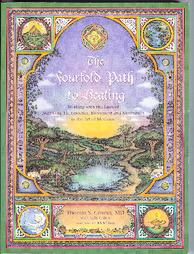
        <p><img src="http://www.dharmacafe.com/images/uploads/Fourfold_Path_to_Healing.jpg" border="0" alt="image" name="image" width="194" height="254"  <b>Many good alternative health books have been written by naturopathic, traditional Chinese, and Ayurvedic doctors, some of whom are also MDs. In his well-written and user-friendly &#8220;The Fourfold Path to Healing: Working with the Laws of Nutrition, Therapeutics, Movement and Meditation in the Art of Medicine,&#8221; Thomas Cowan, MD and friends have finally given Rudolf Steiner&#8217;s Anthroposophical approach its long overdue place at the table.</b>
</p> <p> 	Health and healing books written by actual working clinicians provide welcome relief from the miracle cure propaganda that bombards us every day. Whether it is the ecstatic TV faces of people using the &#8220;Purple Pill&#8221;, Cialis, or the constant drone of your best friend&#8217;s multi level marketing spiel, claiming that they possess a silver bullet&#8217;s healing power, has become the common strategy of all medical marketing in the modern world today. </p>

<p>	Working clinicians know, however, just how challenging and difficult actual healing can be, and that the medicine itself is not nearly as important as the regime that is practiced when the medicine is actually taken. Real doctors understand: alas, there is no edible deity. </p>

<p>	The empirical approach to healing, (this cure is good for this disease) is not nearly as effective as the rational approach in which the body is examined at every level, and restored to balance via a comprehensive regime that effects and heals the whole. </p>

<p>Such understanding and vision serves deeper and more fundamental healing and positions this school of medicine firmly among the other traditional and rational approaches.&nbsp; A true Anthroposophical doctor can&#8217;t help himself. He wants to treat the root of the issue, not just the branch. He will not be satisfied by symptomatic relief alone. </p>

<p>The beauty of Antroposophical Medicine lies in its clear recognition that man&#8217;s physical body is merely the tip of a much more extended and subtler organism. The constituent elements of man then are four fold - physical,&nbsp; - etheric, astral and the human spirit. Health is established by maintaining the proper equilibrium between the constituent parts of man who is healed then by a four fold path.&nbsp; </p>

<p>	So every good doctor requires a way of observing the body in its completeness and in its relationship to the universe and all the things of life. The great traditional medical systems that came out of the East, the Chinese, Ayurveda and Tibetan medicine, are all rational systems. They understand that the physical body is just the visible part of the extended person. The whole must be treated.&nbsp; No meat body materialist will ever be a great healer.&nbsp; In The Fourfold Path to Healing, the good doctor, Thomas S. Cowan, another allopath gone alternative, shares his rational approach to health and well being. </p>

<p>	The book is a cooperative effort, combining the talents and experience of Sally Fallon, the author of Nourishing Traditions and Jaimen McMillian, the founder of Spacial Dynamics. Cowan&#8217;s approach is most deeply influenced by the thinking of Rudolf Steiner, founder of Anthroposophical Medicine, a school of practice which clearly acknowledges that man is much more than simply a machine and that we are as humans alive and functioning on energy levels subtler than merely the physical. </p>

<p>	He has also been influenced by the work and teachings of Edgar Cayce, and the research of an American dentist named Weston Price who went in search of the perfect human diet in the early years of the twentieth century. Being a dentist, Price concluded that he would see the vision of that perfect diet in the mouth of his subjects, signaled by the sign of perfect upper and lowers. Price&#8217;s conclusions about the right human diet and the need for proper animal fats, may shock vegetarian purists but as Cowan says, he has the clinical proof in scans and in happy clients. <br />
	
Dr. Cowan rightly understands that healing requires initially an address to diet.&nbsp; The physical body is fundamentally a food body; therefore all healing begins with a dietary correction in the food body. Cowan&#8217;s conclusion, however, that the human body requires a regular dose of animal fat and even red meat in order to maintain health and well being may well be his most controversial offering. </p>

<p>Practitioners of Traditional Chinese Medicine have been exhorting their vegetarian clients to eat red meat since the system first came to the West. Ancient Chinese medical texts show early oriental doctors treating epidemics of cold and damp diseases which are clearly exacerbated by cold, and phlegm forming raw vegetarian food substances. </p>

<p>So the anti-raw, anti-vegetarian, disposition has become part and parcel of that system even today. Traditional doctors are taught that just about any substance in nature can have medicinal value, and so they are willing to make temporary use of all kinds of foods and herbs in order to heal. Yet the call for the regular use of red meat stands in the face of more modern research. </p>

<p>{pagebreak}</p>

<p>DharmaCafe asked Ori Hofmekler, author of The Warrior Diet Book, to comment on the regular use of flesh foods in the human diet. He provided the following from his book:</p>

<p><i> As for meat, let me say it upfront: Humans haven&#8217;t fully adapted to eating meat. Unlike other predators, we lack enzymes that convert degraded &#8220;D&#8221; proteins into live &#8220;L&#8221; proteins. All life forms on this planet are made from &#8220;L&#8221; proteins. Nonetheless, upon the death of an organism, &#8220;L&#8221; proteins convert spontaneously into &#8220;D&#8221; proteins. This process, known as racemization, typically occurs during the decomposition (rotting) of  meat.</p>

<p>Meat has one of the highest rates of racemization. Improper storage or exposure to high temperatures increases the level of raceant proteins, rendering the meat unsuitable for human consumption. Our bodies are virtually defenseless against the intake of &#8220;D&#8221; proteins. Accumulation of these degraded proteins in the body&#8217;s tissues, particularly the brain, is associated with aging and disease. Racemization isn&#8217;t the only problem.</p>

<p>Due to inhumane treatment, livestock animals produce a highly toxic byproduct of stress. It&#8217;s an adrenalin metabolite called adrenochrome, which catabolizes (wastes and destroys) muscles and other tissues in the body. This metabolite occurs in high concentrations in the meat that we eat.</p>

<p>Meat is known to be a good source of protein, iron and zinc. Nonetheless, one should always be aware of the downside of meat eating.</i>&nbsp; <br />
 
Cowan&#8217;s book opens with his theoretical approach to healing and diet and then moves on to a discussion of the other and subtler forms of healing that are almost always required. In the heart of the book, (25.US) Cowan offers his sometimes very unique considerations of the common human diseases, their causes, and his own approach to healing them.&nbsp; His sections on cancer and heart disease are worth the price of the book. Everyone should read these chapters, since together these conditions are the great killers of mankind.&nbsp; </p>

<p>	Cowan calls for cancer suffers to contemplate great works of art. I was reminded of the time that I had the opportunity to view Adi Da Samraj&#8217;s artwork, The Breather, with a group of thirty-five people or so. After twenty minutes of viewing this monumental image, everyone had come to rest and balance, their nervous systems harmonized by the mere contemplation of the piece. Art is made great and it heals, when it invokes the Eternal Sustenance upon which the body the depends.&nbsp; </p>

<p>Female clients will account for up to seventy five per cent of any clinician&#8217;s workload. Their complex reproductive physiology requires constant attention and they tend to seek out help more easily than men do. Thus as a group they have tended to be more easily exploited by modern industrial medicine. </p>

<p>The Fourfold Path to Healing contains an ample section on women&#8217;s health issues and it is written with a good heart. Dr. Cowan offers life positive and sex positive instructions to serve women in their wellness regimes.&nbsp; His section on osteoporosis should be read by all women, but particularly those who may be underweight and at greater risk for this terrible disease. His instructions on how to target calcium supplementation so that it actually gets to the bones are quite unique. </p>

<p>Of course what every reader of health books wants is lots of exercises and lots of remedies that they can do on their own. Cowan does not disappoint in this matter as he details many of the homeopathic and herbal remedies that he prefers. All disease begins with a knot, a contraction or stagnation of energy in the natural flow of the body and so exercise can be a critical part of any healing regime. Cowan grants significant portions of the book to Jaimen McMillian&#8217;s Spatial Dynamics, which are designed to:</p>

<p>&#8220;Move in an economical manner using the laws known to physics, engineering, and biomechanics to maximize your mechanical advantage, thus benefiting the Physical Body.&#8221;</p>

<p>As McMillian notes, &#8220;by practicing movement that provides wholeness to the Emotional Body, an individual will progress from a condition in which he is a pawn of fate, to one in which he is the architect of his relationships, goals and health.&#8221; </p>

<p>Exercise lovers will derive many hours of pleasurable activity from the detailed instructions and diagrams included in the book.</p>

<p>Like many fine doctors, Cowan is not above commenting on how political and economic issues are effecting our personal and social health. Consider these statements from his homily on cancer:</p>

<p>&#8220;What can we conclude after over 30 years of a strategy that attempts to kill every last cancer cell in the body? In the case of the most common forms of solid tumors (breast, lung, pancreas, colon, prostate, etc.), when the tumor has spread (metastasized), this strategy never works. It never results in the permanent eradication of the cancer and the restoration to health. Never! </p>

<p>And</p>

<p>	&#8220;In the war on terrorism, as with orthodox cancer treatment, the toll on the host increases as &#8220;treatment&#8221; progresses. To combat terrorists, we have already passed laws that define any citizen who speaks out against government policies as a terrorist and that allow the security establishment unprecedented powers to deal with non-conformists. Ask any oncologist. He knows where all this leads. The patient will soon die, partly from the assault of the &#8220;terrorists&#8221;, but also from the debilitating effects of the therapy.&#8221;</p>

<p>	Thank you Dr. Cowan<br />
 </p>

<p> </p>


<p>&nbsp;</p>

<p>&nbsp;</p>
      ]]></content>
    </entry>

    <entry>
      <title>Medicalizing Young Women &#45; A Dangerous Trend</title>
      <link rel="alternate" type="text/html" href="https://dharmacafe.com/health-sexuality/medicalizing-young-women-a-dangerous-trend/" />
      <id>tag:dharmacafe.com,2007:health-sexuality/18.249</id>
      <published>2007-11-05T00:15:01Z</published>
      <updated>2016-02-23T00:29:02Z</updated>
      <author>
            <name>Bill Stranger</name>
            <email>comments@christinesuzuki.com</email>
                  </author>

      <content type="html"><![CDATA[
         <p>These days, young women are besieged by many challenges.&nbsp;  Social <br />
pressures, economic concerns, health problems, schoolwork, and family <br />
tensions all tilt the stress barometer into the dangerous red zone. <br />
Skipping meals, eating junk food along with starvation diets have <br />
become a way of life for teenagers.&nbsp; More than ever, young women seem <br />
to be burning the candle at both ends. </p>

<p>Women&#8217;s life styles and behaviors directly affect their physical and <br />
emotional wellbeing, both for the short and long term.&nbsp; It&#8217;s no <br />
wonder that their hormonal health is under attack.&nbsp;  Premenstrual <br />
Syndrome (PMS), painful periods, irregular or absent periods, ovarian <br />
cysts, polycystic ovaries, fibrocystic breast disease (lumpy, painful <br />
breasts) endometriosis, hormonal migraines, fibroids, acne, <br />
allergies, fatigue and mood swings are occurring in young women at <br />
epidemic rates.&nbsp; Many girls try to ignore their health problems <br />
hoping they will disappear.&nbsp; Others schedule appointments with their <br />
doctors.&nbsp; Odds on, they will leave the doctor&#8217;s office with either a <br />
prescription drug or some version of the Birth Control Pill.</p>

<p>Rather than perceiving hormonal imbalances as aberrations created by <br />
the many abuses of modern life.&nbsp; Medicine has convinced women that <br />
menstruation itself, is the problem and those natural menstrual <br />
cycles are dangerous, disease producing and require medical <br />
intervention.&nbsp; Doctors have also convinced many women that their <br />
ovaries are the villains behind their health problems and emotional <br />
turmoil.&nbsp; The solution: shut it down.&nbsp; The method: some form of birth <br />
control!</p>

<p>The erroneous notion that menstruation is a rather unpleasant, toxic <br />
process has been around for a hundreds, if not thousands of years. <br />
So has the belief that the source of a woman&#8217;s suffering resides <br />
within her ovaries, uterus and her menstrual flow. </p>

<p>In a syndicated column written by a well-known Australian doctor a <br />
reader asked the following question. &#8220;My doctor told me recently that <br />
monthly periods were now regarded by some as a &#8216;disease&#8217; and totally <br />
preventable. Is this true?&#8221;&nbsp; His reply. &#8220;Why should women be burdened <br />
with loss of valuable blood each month, which is often not <br />
manufactured in similar amounts, often leading to anemia and chronic <br />
tiredness?&nbsp; Taking the active ingredients of the oral contraceptive <br />
pill daily, with no seven-day break solves the problem.&#8221; </p>

<p>The sentiment that periods are a disease - or at least a most <br />
unwelcome, unproven and unsafe physiological process - reflects a <br />
growing trend amongst both physicians and pharmaceutical companies to <br />
promote the theory that menstrual cycles should be eliminated.<br />
Leading the charge to eradicate menstruation is Dr. Elsimar Coutinho, <br />
Professor of Gynecology, Obstetrics and Human Reproduction in Brazil. <br />
In his book, &#8220;Is Menstruation Obsolete?&#8221; Dr. Coutinho argues that <br />
monthly bleeding is not the &#8220;natural&#8221; state of women and that <br />
actually places them at risk of various medical conditions.&nbsp; The <br />
author maintains that menstruation is neither medically meaningful <br />
nor sound.&nbsp; He asserts that prehistoric women had fewer than 160 <br />
periods in their lifetime.&nbsp; On the other hand, modern women, start <br />
menstruating earlier, and spend less time pregnant, and have more <br />
than 400 menstrual cycles.&nbsp; <br />
 {pagebreak}<br />
Dr. Coutinho believes that women should be able to choose the timing <br />
and frequency of their periods.&nbsp; In addition to perceiving <br />
menstruation as a failed process, he also contends that it is devoid <br />
of beneficial effects and may even be harmful to women&#8217;s health. <br />
Coutinho&#8217;s work suggests that the most medically advanced &#8220;treatment&#8221; <br />
for menstruation would be its total cessation in all reproductive- <br />
aged women. </p>

<p>According to Dr. Coutinho, the profoundly complicated reproductive <br />
system that has taken millions of years of evolutionary fine-tuning <br />
has now been declared obsolete and harmful.&nbsp; Medical science is about <br />
to provide the rationale and the means to make menstruation <br />
completely disappear.&nbsp; The solutions are simple: just give all women <br />
a continuous low dose birth control pill which is used continuously <br />
for 84 days followed by a seven-day break.&nbsp; This will allow only 4 <br />
bleeds a year.&nbsp; (By mimicking pregnancy, the Pill literally shuts <br />
down the ovaries, and causes a forced bleed each month not a natural <br />
menstrual cycle).</p>

<p>Physicians and researchers alike have enthusiastically embraced Dr. <br />
Coutinho&#8217;s theory.&nbsp;  They see no reason why all women wouldn&#8217;t want <br />
to have fewer periods.&nbsp; Whether is a problem such as migraines or the <br />
just the &#8221; inconvenience and messiness &#8221; of menstruation, the Pill <br />
can now come to the rescue.</p>

<p>Now that &#8220;medical advances&#8221; have conquered menstruation and drug <br />
companies&#8217; glossy marketing campaigns have succeeded in extolling the <br />
Pill&#8217;s virtuosity, what has actually been achieved?&nbsp;  What does the <br />
future portend for all the young women presently seduced by these <br />
promises?&nbsp; Does the Pill really improve a woman&#8217;s health?&nbsp;   Or, will <br />
it contribute to a health catastrophe of unparalleled proportions?</p>

<p>The Shocking Facts About the Pill:</p>

<p>The pill has become the most popular method for birth control. But, <br />
in recent years, oral contraceptives have increasingly been <br />
prescribed to young women for noncontraceptive purposes. The Pill <br />
has become the darling of the medical world for treating just about <br />
any hormonal problem a girl may have and then some. To date, the <br />
Pill is prescribed for acne, to &#8220;regulate&#8221; periods, for heavy <br />
bleeding, and painful periods, to treat PMS, endometriosis, <br />
migraines, ovarian cysts and polycystic ovaries. The Pill is even <br />
prescribed to girls as young as thirteen for acne.</p>

<p>The Pill is said to be one of the safest drugs around. But is it?<br />
In December 2002, the US government published its biannual Report on <br />
Carcinogens that added all steroidal estrogens to the list of <br />
&#8220;known&#8221; human carcinogens. The gravity of this finding cannot be <br />
overstated: all estrogens used in HRT and oral contraceptives have <br />
now been proven, unequivocally, to cause cancer! To make matters even<br />
 worse, synthetic progesterone (proteins) such as Provera or Depo-Provera, <br />
used in HRT, oral contraceptives, injections <br />
and implants are also listed as carcinogens.</p>

<p>&nbsp; This is the indisputable fact:&nbsp; the ingredients of the Pill, <br />
whatever its formulation, cause cancer.&nbsp; How can any carcinogens be <br />
deemed safe especially when given to vulnerable young women? <br />
Studies have linked estrogens and progestins to breast, ovarian, <br />
endometrial, cervical, skin, brain and lung cancers.</p>

<p>There is nothing natural about taking the Pill.&nbsp;  As a result of the <br />
Pill, a woman&#8217;s ovaries may be permanently damaged, resulting in <br />
infertility.&nbsp; Fabio Bertarelli, a billionaire manufacturer of <br />
fertility drugs told the Wall Street Journal: &#8220;Our usual customers <br />
are women over 30 who have been taking birth-control pills since they <br />
were teenagers or in their early 20&#8217;s.&#8221; </p>

<p>Contraception formulas also increase the risk of coronary artery <br />
disease, immune dysfunction, liver toxicity, strokes, blood clots, <br />
osteoporosis, gum disease, high blood pressure and ectopic <br />
pregnancies.&nbsp; The side-effects include nausea, vomiting, <br />
migraine-type headaches, breast tenderness, allergies, weight <br />
increases, changes in sex drive, depression, head hair loss, facial <br />
hair growth, colitis, Crohn&#8217;s disease and increased incidence of <br />
vaginitis. Many of these effects may persist long after the <br />
discontinuation of the Pill.</p>

<p>&nbsp; In addition, the Pill depletes Vitamin B1, B2, B6, Folic Acid, B 12, <br />
vitamins C, E, K, zinc, selenium, magnesium and the amino acid <br />
tyrosine, essential for proper thyroid function. </p>

<p>Even more alarming is the fact that the earlier a woman uses the Pill <br />
the greater the risk of developing breast cancer and also having a <br />
worse prognosis. One disturbing study showed that the Pill <br />
caused chromosomal aberrations in the breast tissue of young female <br />
users. This research was further backed up with a study showing <br />
that there was a 100 percent increased risk of breast cancer, which <br />
extended from 10 years of pill use down to just three months!&nbsp; So, it <br />
is of no surprise that women as young as 17 years old, are now being <br />
diagnosed with breast cancer.</p>

<p>&nbsp; In one landmark study, researchers found that women who took the <br />
Pill before the age of 20 and were later diagnosed with breast <br />
cancer, have tumors with the worse prognoses than do breast cancer <br />
patients who started taking the Pill at a later age or had not <br />
previously taken it. Another study found this most terrifying <br />
result: the younger the women were at the time of diagnosis, the <br />
greater the possibility they would die within five years.</p>

<p>Echoing these findings, the U.S.&nbsp; National Cancer Institute published <br />
a study in 2003 showing that the risk of breast cancer was <br />
significantly increased for women between the ages of 20-34 who had <br />
used the Pill for at least six months.</p>

<p>Progestins make their own mischief, raising &#8220;bad&#8221; cholesterol and <br />
blood pressure, altering sugar metabolism, compromising the immune <br />
system, and creating undesirable masculinizing effects.&nbsp;  One study <br />
found that women who used Depo-Provera before the age of 25 increased <br />
their relative risk of breast cancer by 50 percent and for women <br />
using it for six or more years; their risk was raised significantly <br />
to 320 percent.</p>

<p>Of further concern are studies showing that oral contraceptives and <br />
Depo-Provera contribute to bone loss in adolescents.</p>

<p>With the arrival of the continuous low dose Pill, normal menstrual <br />
cycles are now fair game for the drug companies.&nbsp; This option appeals <br />
to many young women who believe that menstrual cycles are, indeed, &#8220;a <br />
curse&#8221; and an unnecessary inconvenience. Nutritionally depleted <br />
diets, stress and environmental toxins, the real culprits of <br />
menstrual irregularities and hormonal imbalances, have been all but <br />
ignored by doctors who prefer to opt for a quick drug fix.<br />
Getting healthy is really the challenge before us.&nbsp; Understanding the <br />
immense importance of a healthy diet, good nutritional support, <br />
exercise, relaxation techniques along with the guidance of competent <br />
holistic health practitioners is the only way to truly assist young <br />
women to regain their hormonal health and ensure their fertility.<br />
Should menstruation, an intrinsic expression of a woman&#8217;s <br />
physiological and psychological self, ever be made obsolete? </p>

<p>Absolutely not! </p>


      ]]></content>
    </entry>

    <entry>
      <title>Jungle Medicine</title>
      <link rel="alternate" type="text/html" href="https://dharmacafe.com/health-sexuality/jungle-medicine/" />
      <id>tag:dharmacafe.com,2007:health-sexuality/18.295</id>
      <published>2007-06-18T21:40:00Z</published>
      <updated>2007-06-20T18:26:20Z</updated>
      <author>
            <name>Bill Stranger</name>
            <email>comments@christinesuzuki.com</email>
                  </author>

      <content type="html"><![CDATA[
         <p>In  the spring of 2003 I spent a month on a little island in a lake not far from Pucallpa, Peru to drink ayahuasca with the Shipibo curandero, Mateo Arevalo. I had gone down there to investigate a story of a man who, by drinking ayahuasca every other day for two months, had been cured of a melanoma that western oncologists said would kill him within the year. In our party were two people with cancer. They of course hoped that the ayahuasca would cure them, as well.</p>

<p>I had been there about three weeks, drinking ayahuasca three nights, then one night rest, then three more nights, and so on.<br />
 
One morning, at the crack of dawn, following a night of drinking, I walked down to the lake to take a swim.&nbsp; At the shore was the usual scene:&nbsp; the girls and women washing clothes, boys readying their nets to catch our breakfast. I paused to reflect on this primeval happiness. It made me think how much more civilized the Shipibo (the people of the lake) are compared to our so-called modern culture, and how much I love them and their place.&nbsp; I remembered the sublime mystery I was treated to just a few hours before when my body filled with a divine light. We are so smug in our western science, yet these simple people hold the key to profound religious and scientific mysteries that dwarf our knowledge.&nbsp; In this pristine moment, I savored that wonderful blend of the sacred and the simple and ordinary.<br />
 
 I dropped my towel to the ground.&nbsp;  A very large, brownish-red  ant quickly darted into it. It was more than an inch long.&nbsp;   Very gently I reached down to shake the ant out. The moment I touched the towel, as quickly as it darted in, the little fucker darted out and bit me in between my fingers.&nbsp; I have never felt such intense and sharp pain.&nbsp; I had no idea if it was poisonous but I feared the worst.&nbsp; My friend Emilio, Mateo&#8217;s son in law and apprentice, was down by the lake helping the young boys fish. &#8220;Emilio!&nbsp; Help! Pronto!&#8221;<br />
 
Emilio came running. My hand was already starting to swell. It was already as big as a golf ball where it was bitten.<br />
 
Emilio arrived. I pointed to the vicious ant that was poised to strike again, its pincers throbbing.&nbsp; Emilio looked aghast, and with the heel of his bare foot stomped it into its next life.<br />
 
&#8220;Es toxic?,&#8221; I ask. </p>

<p><br />
He looks at me blankly.<br />
 
I went paranoid, thinking I was about to become a statistic. Another dumb gringo dies of some insect bite while looking for God in the jungle.&nbsp; Well, at least I found it. I think I can feel my face begin to sag on one side.&nbsp; I was becoming paralyzed.&nbsp; I put pressure on my wrist to stop the flow of blood, thinking that will help.&nbsp; &#8220;Es toxic?&#8221; <br />
 
We head to the village, a hundred yards away. I start to run but then I remember that that will just make my heart beat faster and speed my death.&nbsp; When we finally reach the village Emilio gets some mapacho (tobacco) and chews it.&nbsp; He put the gooey mess on my swollen hand and warms it over the fire.&nbsp; To the Shipibo mapacho is the mother of ayahuasca and can cure anything.&nbsp;  I am in tremendous pain. I&#8217;m not sure if its the ant bite or the vice grip I have on my circulation, or if I am just burning myself in the fire.&nbsp;   I love Emilio like a brother, but I want the real shaman.&nbsp; &#8220;Donde esta Mateo?,&#8221;&nbsp; I ask.&nbsp;  Emilio, who speaks Shipibo, Spanish, and very little English, makes a gesture to tell me he is still sleeping.<br />
 
Mateo  is all curled up with his lovely wife Adelia under the mosquito net hanging from the thatched roof.&nbsp; Emilio explains what happened. By now the entire village, really an extended family that of which I had become an honorary member, is awake. This is a big event.&nbsp; Everyone is gathered around, wanting to know what happened to hermano Roberto.&nbsp; Word was I had been bitten by a snake.<br />
 
When Adelia learns I was bitten by just an ant, she smiles her big gold toothed smile, and says something in Shipibo.&nbsp; All the women and girls run away squealing with laughter.&nbsp; Emilio looks at me, smiles, and pats my back.&nbsp; I am slightly relieved but I still don&#8217;t know if I&#8217;m going to die or just be paralyzed.&nbsp; &#8220;Que significa?,&#8221; I ask Adelia and Emilio.&nbsp; They just shake their heads.<br />
 
Emilio forces a little laugh,&nbsp; &#8220;&#8220;Only woman help.&#8221;<br />
 
Mateo stirs.&nbsp;  I ask him, &#8220;Is this poisonous?&#8221;<br />
 
&#8220;No,&#8221; he says smiling from the moment he opens his eyes. &#8220;Not too bad.&#8221;&nbsp; He said something to Emilio in Shipibo that sent him running off into the trees.&nbsp; Mateo came to this place because of the master plants that grow here.<br />
 
&#8220;Mateo,&#8221; I said, not satisfied with his answer.&nbsp; &#8220;This really hurts.&nbsp; Look.&#8221;&nbsp; He didn&#8217;t seem that interested.<br />
 
&#8220;Don&#8217;t worry,&#8221; he said yawning,&nbsp; &#8220;I was sleeping in a tree and got bit by sixty of them at one time.&#8221;<br />
 
&#8220;Sixty of them!&nbsp; What happened?&#8221;<br />
 
&#8220;I laughed,&#8221; he said.&nbsp; &#8220;It made me happy. Made me stronger.&#8221;<br />
 
&#8220;That&#8217;s you,&#8221; I said still putting so much pressure on my wrist that my hand turned blue.&nbsp;  &#8220;What is one of them going to do to me?&#8221;<br />
 
We already had an episode with the lovely chiggers, darling little bugs that enter your body through the pores of your skin down by your ankles, and begin to colonize your body, marching upward, reproducing every step of the way, hundreds, thousands of times, until your body breaks out in blistered sores oozing puss and itching like all hell. I and another member of our party got them the first day here. The Shipibo just pick a lime off a tree and a rub a little juice mixed with mapacho on the first sign of itchy ankles, which stops the problem.&nbsp; But Mateo recommended alcohol mixed with mapacho for us.&nbsp;  The other member of our party thought he was a native and opted for the lime juice cure, which didn&#8217;t work.&nbsp; I went straight for the alcohol-mapacho blend which worked so well I carried a bottle of it around at all times, pouring it liberally on me whenever I felt the slightest itch.<br />
 
I wanted to be sure I was getting gringo therapeutics for the ant bite.&nbsp; The &#8220;asula&#8221; they called it.<br />
 
But before Mateo could answer Emilo came back from the forest with a branch of a bush, as thick as my finger, about two feet long, that he was sharpening to a fine point like an arrow with his machete.<br />
 
Mateo quickly jumps up and very firmly grabs my wrist. He looks at my wound. Emilio approaches with the pointy stick.&nbsp; I am not happy, about to undergo my first jungle surgery.&nbsp; I thought of how my father, a dentist, would hide the needle from the patient&#8217;s view so not to scare them, acting nonchalant as he stabbed them in the gum.&nbsp;  The thought of that sharp stick piercing my hand nearly makes me faint. But okay, if it will save my life.&nbsp; I put my head between my legs to stay conscious.&nbsp; I try to find some trust. I miss Karen, and my son, and wondered where is that divine light when you really need it.<br />
 
But instead  of piercing me with the sharp stick,&nbsp; a pearl sized drop of white sap oozes from it onto my wound, instantly relieving me of the pain. Within twenty minutes the swelling was gone. I could hardly tell where I had been bitten.<br />
 
But why did the girls and women all run away, abandoning me  in my moment of real need, when they had the cure all along?&nbsp;  What kind of karma is this?&nbsp; Finally our translator wakes up. I take her to Adelia and ask her to repeat what Adelia said about the cure. She laughs.&nbsp;  Emilio&#8217;s translation lacked a certain detail.&nbsp; She said,&nbsp; &#8220;Only the juices flowing from a women&#8217;s vagina can heal the pain of the asula.&#8221;<br />
 
It works for everything else.</p>

<p><i><br />
Robert Forte studied the history and psychology of religion at the Divinity school of the University of Chicago and has taught at the University of California at Santa Cruz. He served on the board of directors of the Albert Hofmann Foundation and is the editor of</i> Entheogens and the Future of Religion <i> and</i> Timothy Leary: Outside Looking In.</i></p>

<p>
</p>
      ]]></content>
    </entry>


</feed>